
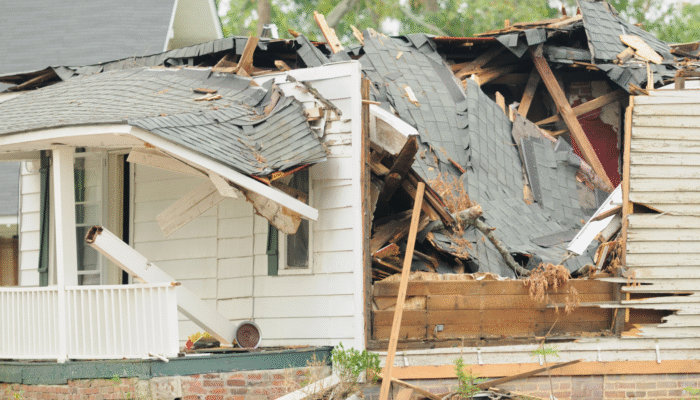
Wind Damage to Roof Systems: How Excessive Winds Compromise Structural Integrity
Excessive winds have the potential to cause significant damage to roof systems and exterior building finishes. When high winds pass over and around a pitched roof, they create uplift pressures that can exceed the resistance capacity of roofing components. Once this threshold is surpassed, roofing materials become vulnerable to displacement, detachment, and progressive wind-related damage.
Wind uplift occurs as air pressure differences develop between the exterior surface of the roof and the interior or underside of the roofing assembly. As wind accelerates over the roof surface, negative pressure is created, effectively pulling upward on roofing components. If materials are not properly secured or have weakened over time, these uplift forces can lead to partial or complete roof failure.
The most severe uplift pressures are typically concentrated at specific roof locations. Windward corners, rakes, eaves, and ridges experience the highest levels of turbulence due to abrupt changes in airflow. These areas are consistently the first points where wind damage initiates, especially during high-wind events such as thunderstorms, tropical storms, or hurricanes.
Roofing materials that are aged, weathered, deteriorated, or improperly attached are especially susceptible to wind damage. Over time, exposure to ultraviolet radiation, moisture, temperature fluctuations, and normal wear reduces material strength and fastener performance. When combined with high wind forces, these weakened components are far more likely to fail.
Wind damage is also highly dependent on the type of roof system in place. Asphalt shingles, wood shakes or shingles, clay or concrete tile, and metal panel systems each respond differently to wind forces. Attachment methods, fastener spacing, underlayment design, and edge detailing all influence how well a roof performs under wind loading. As a result, damage patterns and failure mechanisms vary significantly between roof types.
Building codes at both the national and state levels require structures to withstand forces generated by minimum design wind speeds based on geographic location. These standards are intended to prevent roof and structural damage during expected wind events. However, field experience shows that when wind-related failures occur, the root cause is often inadequate construction or improper installation rather than wind speeds exceeding design limits.
Roof systems that are not installed in accordance with industry standards and accepted wind-resistance practices have a reduced threshold for failure. Improper nailing patterns, insufficient fasteners, poor edge securement, and noncompliant materials can all compromise wind performance. In such cases, damage may occur at wind speeds well below those required by building codes.
Understanding how wind interacts with roof systems highlights the importance of proper design, quality installation, and regular inspections. Addressing vulnerabilities before a major wind event occurs can significantly reduce the risk of damage, extend the life of the roof, and protect the overall integrity of the structure.