
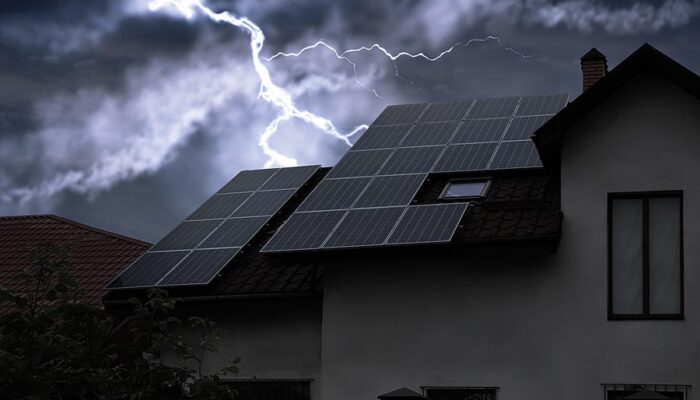
Lightning Damage to Buildings: Causes, Common Failures, and Forensic Evaluation
Property damage resulting from lightning strikes is estimated to total between four and five billion dollars annually. Due to the sudden and extreme nature of lightning events, claims involving lightning damage often require forensic engineering and detailed assessment to accurately determine the extent of damage to a structure and its individual components.
Lightning-related damage claims are most frequently encountered in the insurance industry, particularly involving mechanical and electrical systems. Based on field experience, the majority of reported lightning damage claims stem from failures of heating, ventilation, and air conditioning (HVAC) outdoor units and well pump motors. These systems are highly vulnerable because they are often exposed, grounded, and connected to electrical circuits that can transmit high-voltage surges.
In addition to HVAC units and well pumps, other commonly affected components include brick masonry chimneys, commercial and industrial motors, and sensitive electrical equipment. Lightning does not need to directly strike a component to cause damage. Nearby strikes can induce powerful voltage surges that travel through electrical lines, grounding systems, and metallic pathways within a building.
Electrical equipment damage from lightning is typically caused by extremely high voltages that occur in fractions of a second. These surges often happen quickly enough to bypass or overwhelm installed surge protection devices. As a result, internal electrical components may fail even when surge protection is present. In outdoor air conditioning units, damaged contactors and run capacitors are common indicators of lightning-related failure. Blackened, pitted, or melted electrical components are often consistent with high-energy electrical events.
Lightning strikes can also cause significant damage to building materials, particularly brick masonry. When lightning energy passes through brick chimneys or masonry walls, the moisture trapped within the brick can rapidly vaporize. This sudden expansion creates internal pressure that can fracture or shatter the masonry, producing damage that appears explosive in nature.
Determining whether damage is attributable to lightning requires careful forensic evaluation. Inspectors analyze damage patterns, component failure modes, burn marks, and the presence of electrical arcing. Weather data, lightning strike records, and site conditions are also reviewed to correlate reported losses with documented lightning activity in the area.
Accurate identification of lightning-related damage is critical for proper claim resolution. Without a detailed assessment, lightning damage may be misattributed to wear and tear, mechanical failure, or manufacturing defects. Forensic engineering helps establish causation, define the scope of damage, and support fair outcomes for all parties involved.
Lightning events are unpredictable and unavoidable, but their effects on buildings and equipment can be better understood through professional evaluation. Proper documentation and expert analysis ensure that damage is accurately identified and addressed, helping reduce disputes and unnecessary replacement costs.